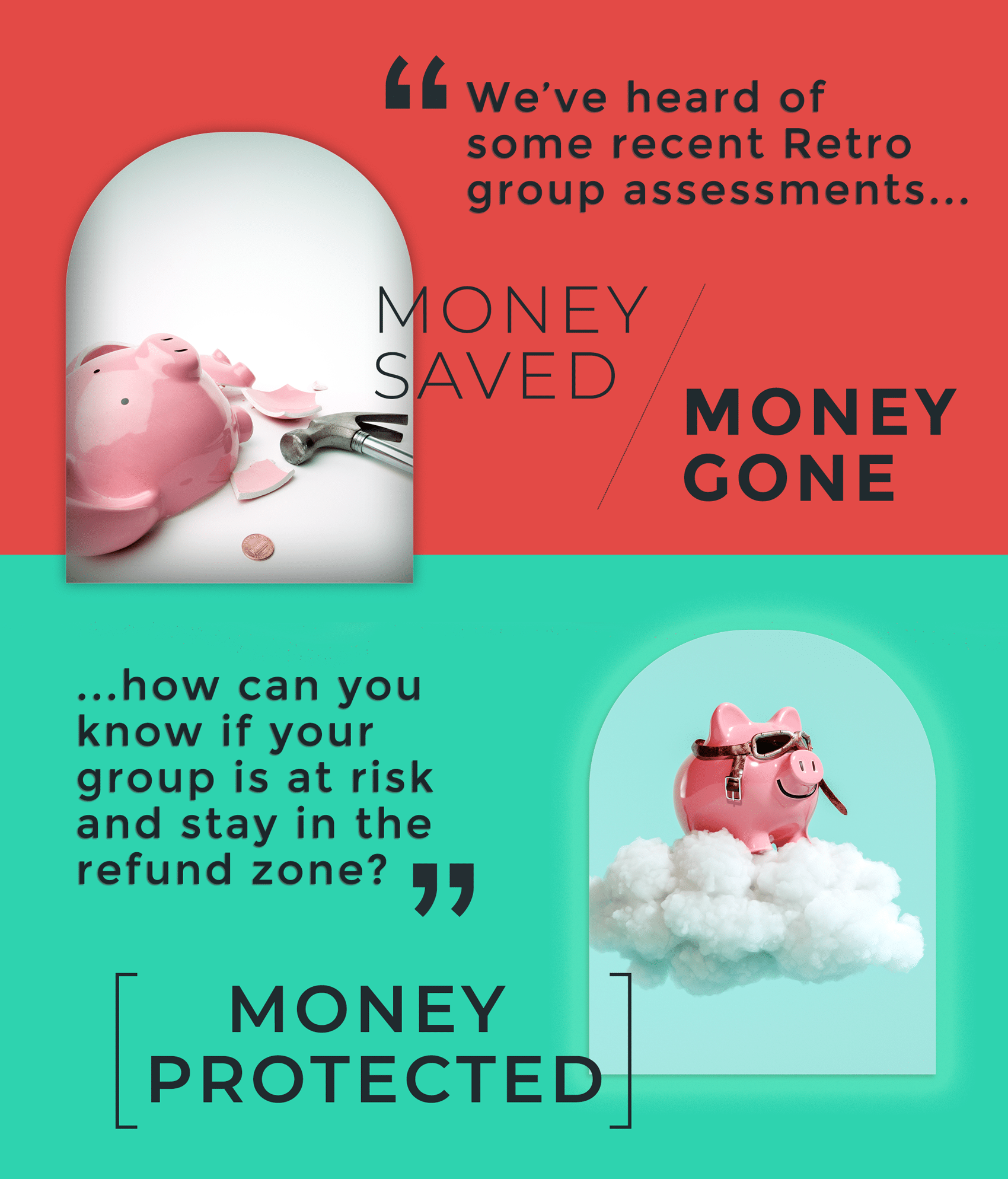
Retro group assessments can turn expected refunds into unexpected costs. We’re breaking down why they happen, how to spot warning signs, and what you can do to stay in the refund zone.
Why do Assessments Happen?
Assessments don’t just happen out of the blue. They’re triggered when a Retro group’s claims and losses exceed what their plan design can handle. Further, they can largely be anticipated well in advance of their impact. If your group isn’t actively managing risk and claims costs, you could find yourself in the danger zone — losing refunds and facing unexpected costs. Proactive risk management, smart plan design, and strong underwriting are essential to staying in the refund zone.
Is Your Retro Group at Risk?
To avoid assessments, you need to know the warning signs. Here are key indicators that your group might be heading for trouble:
- Rising Claims Costs: If claims costs are climbing, refunds are likely shrinking. Ask your Retro group for refund data from the past three years to spot any downward trends. It’s also worth asking about group-wide claims cost trends.
- Lack of Communication: You’re not receiving regular updates on how your claims are impacting future assessments or refunds.
- Inconsistent Safety and RTW Programs: Safety efforts and return-to-work strategies aren’t consistently applied or discussed, leaving your company exposed to unnecessary risk.
- Recent Large Claims Without a Follow-Up Plan: A major claim has occurred, but there’s no clear action plan or response from your Retro provider. This likely signals a broader service gap affecting others in the group. Review your group’s performance using L&I’s quarterly performance report—it will help you ask the right questions and understand what’s at stake.
How Strong Groups Avoid Assessments
Retro groups that effectively manage claims and risks are less likely to face assessments. They do this by:
- Creating the Right Plan: Aligning the Retro group’s plan with the group’s risk profile and refund goals. Reviewing it annually to adjust for changes in the environment and from L&I.
- Underwriting strategically: Building and maintaining a low-risk pool by rigorously vetting new potential members and enforcing participation standards that support strong claims outcomes. (See Retro Group Facts for more on underwriting.)
- Data-Driven Strategy: Monitoring claims data consistently to spot risks early and respond proactively.
- Targeted Safety and Claims Programs: Implementing effective injury prevention measures and claims management strategies (e.g. light duty work, KOS) to reduce injury rates, minimize losses and maximize the financial returns for every member.
How to Keep Your Company in the Refund Zone
If your group is struggling, it may be time to assess your Retro provider. Ask these questions to ensure you’re getting the support you need:
- How do they assess potential new participants in the group to appropriately manage risk?
- Are they proactively working with you to lower your loss ratio?
- Are they providing regular performance analysis and strategic guidance?
- Are they responsive to your needs and accessible? Do you feel heard, confident and happy with the guidance they provide?
If the answers aren’t clear or the guidance isn’t proactive, it may be time to consider whether you’re in the right group. Strong Retro groups provide targeted support, keep members informed, and align strategies to minimize claims and maximize refunds. Weak groups surprise you with disappointing results and assessments.
If you’re unsure where you stand with your Retro group, and want to talk it over, give us a call or email us. We’re available and would be delighted to talk workers’ comp with you!
425-349-4477
workerscomp@vigilant.org

