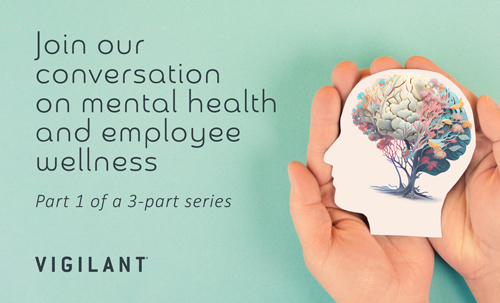
This is the first of three articles about mental health in the workplace, and we’re asking for your input. While Mental Health Awareness Month may have just come to a close, we are committed to keeping this vital conversation going forward. We continue to hear about this topic with increasing frequency from our members—and it is one that deserves thoughtful attention and practical action now more than ever.
Across manufacturing, agriculture, construction, and other industries, we’re seeing a developing theme: Behavioral and mental health challenges are a growing and pressing reality. Management and HR are navigating these issues in real time, often without a clear roadmap.
Vigilant isn’t a mental health provider, and we don’t claim to have all the answers. What we do bring is a commitment to the employers we serve (which often translates into recognizing and addressing issues related to employee wellbeing)—and a belief, grounded in our core value of Others Before Self, that this is a conversation worth having thoughtfully and honestly with Vigilant, with other members, and internally within your organization.
The industry data reflects what many of our members are already witnessing—that mental health challenges (stress, anxiety, and depression) are among the leading contributors to absenteeism, workforce instability, and reduced productivity. According to the National Alliance on Mental Illness (NAMI)’s 2025 Workplace Mental Health Poll, 34 percent of employees reported that their mental health negatively impacted their productivity in 2024. The connection to physical safety is equally significant: A meta-analysis of 147 studies involving more than 1.4 million workers confirmed that workplace injuries and mental health challenges are deeply interconnected, each making the other more likely. In industries where a few moments of inattention can result in serious injuries, that relationship is hard to ignore.
Mental health challenges also rarely originate solely in the workplace. What happens at home with a spouse, a child, or an extended family member directly shapes what an employee brings to work in ways that are real but not always easy to see or address.
In the coming weeks, we’ll explore a range of themes related to mental health and wellbeing, including how workplace culture can support (or quietly undermine) wellbeing, ways to better leverage resources you may already have, and practical steps to build a more supportive workplace over time.
We recognize that mental health familiarity, experience, and resources vary across our membership. Our goal is to equip you with useful information, share ideas that may resonate, and create space for a conversation that is meaningful and likely overdue. We’re glad to be having it with you, and we genuinely value your perspective. If you’re navigating similar challenges, trying something that’s working, or just thinking this through, we’d love to hear from you. Use our contact form to help us shape the conversation.