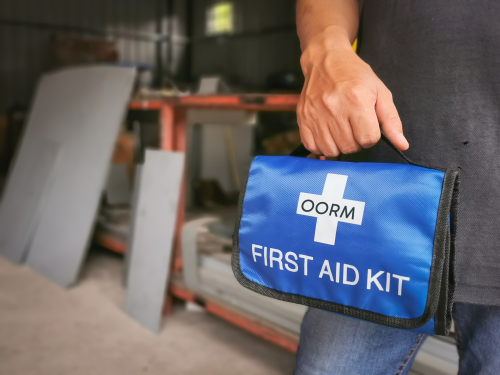
The U.S. Department of Labor’s Occupational Safety and Health Administration (OSHA) has announced new guidance on “Opioid Overdose Rescue with Reversal Medications” to help employers effectively respond to opioid overdose emergencies in the workplace. The guidelines suggest that employers keep overdose kits and store them in visible and accessible locations among other potentially life-saving measures. Opioid overdose reversal medications (OORMs) such as naloxone (Narcan) and nalmefene work to block the effects of opioids if someone has them in their system, and generally have no effect on someone who has not taken opioids. OORMs don’t take the place of emergency services, such as 911, but serve as an immediate temporary stopgap while waiting for emergency responders to arrive.
The new guidance suggests sources for obtaining OORMs, including an over-the-counter nasal spray. As with any new safety initiative, if you choose to have overdose kits, you should train your employees on their availability and use.
The American National Standards Institute (ANSI) and the International Safety Equipment Association (ISEA) have updated their joint standard for workplace first aid kits to include the OORMs in ANSI/ISEA Z308.1-2026.
Tips: Employers may wonder if having these OORMs might encourage drug use, or undermine zero tolerance policies. Unfortunately, zero tolerance policies aren’t foolproof, which is why employers generally back them up with drug testing. Realistically, employers may need to terminate someone who has violated their drug and alcohol policy, but having a kit on hand could potentially prevent a fatality. For information about OORMs, contact your occupational medicine clinic or local pharmacist.
Members: Your Vigilant Law Group employment attorney can advise you on drug testing policies and your Vigilant safety professional can provide general recommendations about the placement and contents of first aid kits at your workplace.

