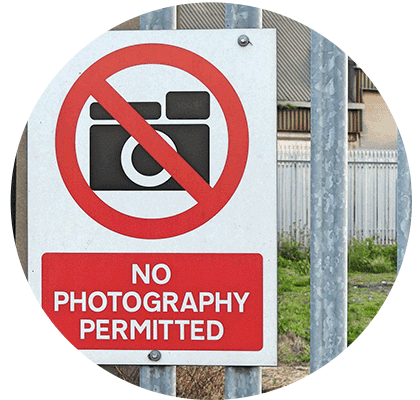
The National Labor Relations Board (NLRB) recently ruled against an employer that attempted to enforce its rule against photography in the workplace. A labor contract between an oil refinery employer and union had a “Photograph, Camera & Video Policy,” which restricted use of photography and cameras. The policy stated the basis of the rule was “to prevent any proprietary information from leaving the property and to prevent any photographic image of the refinery without the express written consent from management.” The company disciplined one employee and fired another for taking photographs of contractors’ vehicles that were parked in the employee lot. The presence of these unauthorized vehicles made it difficult for employees to find parking, so the employees intended to ask the company’s security guards to remove the vehicles.
The Administrative Law Judge in the case concluded that the company’s justification for the work rule had no bearing under these facts, and taking disciplinary action violated the National Labor Relations Act (NLRA). The employees were taking photographs to identify violations of the parking rules, which affected their working conditions and had nothing to do with confidential, proprietary, or secret information. The judge said, “While an employer may maintain these categories of policies for legitimate business purposes under [existing] Board law, it may not apply them to restrict protected concerted activity.” The Board agreed with the judge and ordered the company to rescind the discipline, reinstate the terminated employee, and pay the terminated employee for lost wages and any other out-of-pocket costs resulting from the unlawful termination (Phillips 66 Company, NLRB, Dec. 2023).
Tips: Under Section 7 of the National Labor Relations Act (NLRA), most nonmanagement employees have a right to engage in protected “concerted” (group) activity when acting or communicating about the terms and conditions of their employment for mutual aid or protection. These provisions apply to both unionized and nonunion workforces. Check out our previous newsletter article, Q&A: Employees may have right to talk with customers about pay (9/7/23) for more information about NLRA Section 7 rights, and also see our Legal Guide, Retaliation Claims: How to Avoid Them for guidance on recognizing other potential retaliation scenarios. Please contact your Vigilant Law Group employment attorney to discuss the specifics of applying any particular “no-camera” policy or other policies that may involve protected concerted activity under Section 7.

