
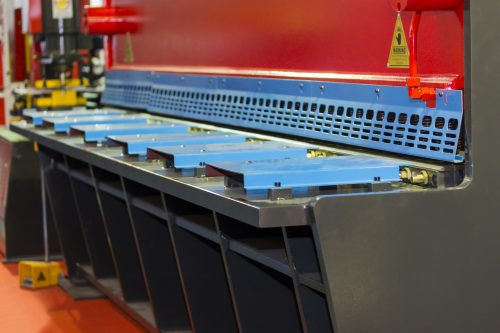
The Occupational Safety and Health Administration (OSHA) has issued an update to the National Emphasis Program on Amputations in Manufacturing Industries, effective June 27, 2025. OSHA Directive CPL 03-00-027 renews the program and makes several significant changes. The directive is set to remain in effect for five years with the purpose of reducing and eliminating amputation hazards in targeted manufacturing industries. Below are the key changes in the updated Amputations NEP, which:
- Allows the deletion of establishments from OSHA’s programmed inspection list if they had an Amputations NEP inspection within the previous 24 months, with no reported amputations during that period.
- Permits the expansion of “unprogrammed” inspections (triggered by a complaint or referral) to an Amputations NEP inspection only if the North American Industry Classification System (NAICS) code is listed in Appendix B of the updated Amputations NEP.
- Exempts any establishment that has 10 or fewer employees from inspections under the Amputations NEP if they have a primary NAICS code that appears on the “Low-Hazard Industry Table” of the Appropriations Act Directive. OSHA’s webpage for Enforcement Exemptions and Limitations Under the Appropriations Act includes a link to the latest Low-Hazard Industry Table (November 14, 2024).
- Revises the methodology used to target industries, resulting in an updated list of NAICS codes that include industries such as soybean and other oilseed processing; frozen specialty food manufacturing; fruit and vegetable canning; hardwood veneer and plywood manufacturing; prefabricated wood building manufacturing; all other miscellaneous wood product manufacturing; and various types of foundries. See Appendix B of the updated Amputations NEP for the current list; the NAICS codes marked with an asterisk are new additions to the list.
- Requires State Plans to have enforcement policies and procedures in place that are at least as effective as those in the updated NEP. Oregon OSHA already has a National Emphasis Program (NEP) on Amputations and Washington’s Department of Labor and Industries, Division of Occupational Safety and Health (DOSH), also already has a directive (2.70 Enforcement Emphasis on Amputations) that implements federal OSHA’s prior Amputations NEP. These agencies will need to update their own programs or adopt the new federal Amputations NEP. Cal/OSHA doesn’t have its own emphasis program on amputations, so it will need to adopt the updated federal Amputations NEP or develop its own. The Arizona Division of Occupational Safety and Health (ADOSH) enforces the federal rules. In Idaho and Montana, federal OSHA enforces workplace safety, including the new NEP.
Tips: Employers in manufacturing environments should review their policies and take proactive steps to ensure that machine guarding standards are up to date. This includes ensuring that pinch/nip points are guarded; regularly inspecting guards for damage; and ensuring guards are put back on after being removed for maintenance activities.
You should also follow lockout-tagout standards and procedures, while properly training employees in all aspects of machine operations, the dangers of bypassing guards, hazard identification, and reporting hazards. Further, you should use OSHA’s hierarchy of controls for managing workplace hazards. If you have questions about safety compliance or potential risks, contact your assigned Vigilant safety professional for assistance. Also see our Legal Guide, Lockout/Tagout (Hazardous Energy Control).